My AI journey: from a parking ticket to my own mobile app
Beating a parking fine with AI
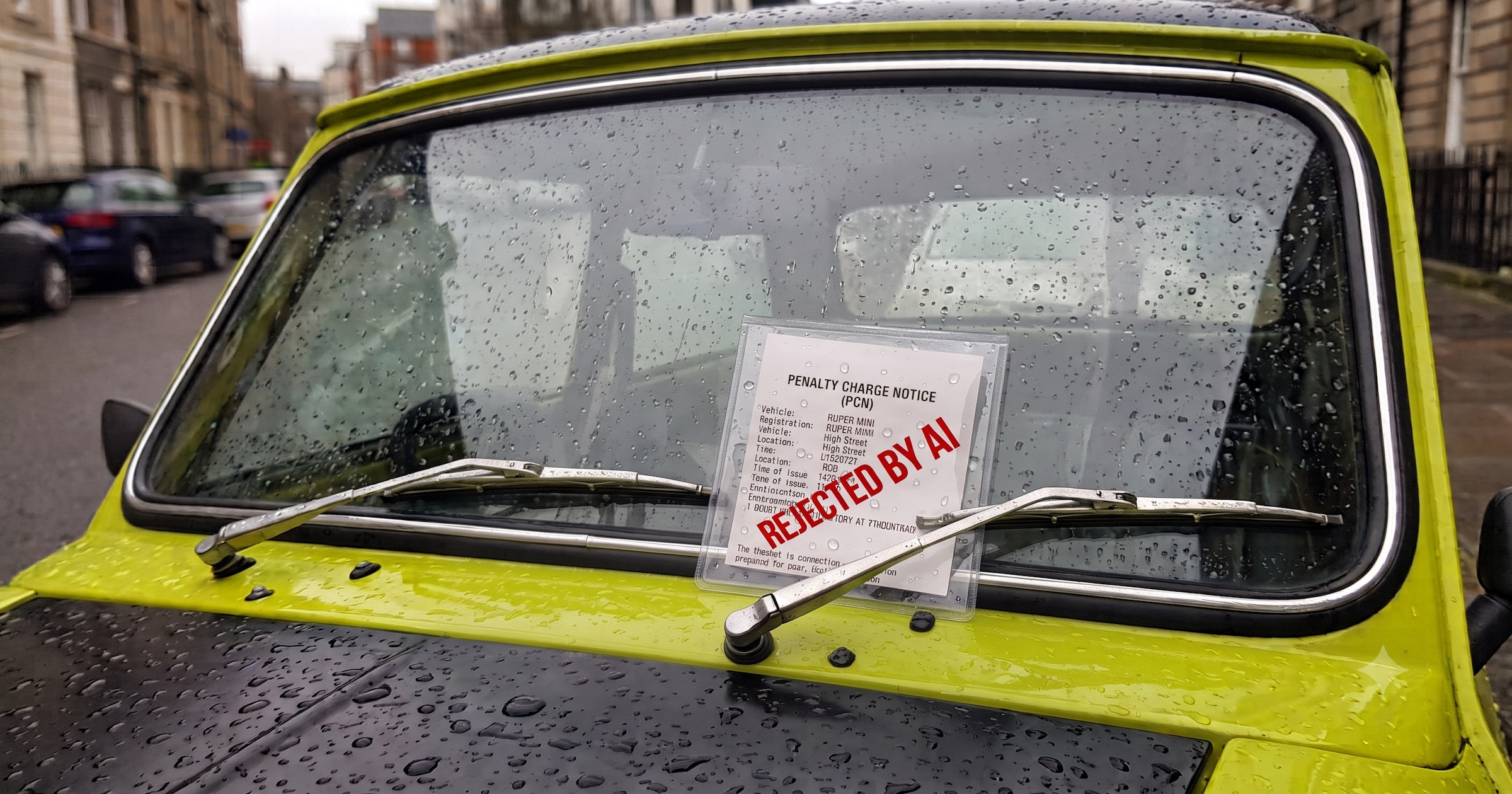
A year ago, I came back to my car and found a parking fine tucked under the wiper - £60, reduced to £35 if I paid quickly and quietly. I was adamant it had been issued wrongly - there was not a single sign telling me I could not park there. Before I lodged the appeal, though, I wanted to be sure I actually had a case, and thought this would be a great experiment and trial of ChatGPT. I entered the evidence - the signage, or the lack of, the exact location I had parked, the time printed on the ticket - and asked ChatGPT whether I had grounds to challenge. Within seconds, it told me I did. I was flabbergasted at how quickly it had taken in all the information and come to a decisive, unequivocal response.
I then asked ChatGPT to draft an appeal. What came back, within the blink of an eye, was a small masterpiece of the driest, most procedural English, befitting a local English council: a reference to the relevant traffic regulation order, a calm paragraph about inadequate signage, not one word of the outrage I actually felt. I read it back, made a few minor revisions and sent it. A few weeks later I received an email stating my parking appeal had been successful. £35 saved, and a slightly smug realisation - if this tool could help me in areas I knew little about, perhaps it could also help me and my colleagues.
AI in the workplace
When GenAI tools such as ChatGPT, Gemini and Copilot arrived in the workplace, it felt like everyone discovered the tools within the same week. The first wave of workplace use was small and a little sheepish: checking the tone of an email before hitting send, or pasting a 40-message thread in and asking it to summarise what mattered. Then the meetings started writing themselves. You would leave a Teams call and the intelligent recap was already waiting - AI meeting notes, recommended actions, a timeline of who said what - removing the frantic scramble to type everything up before the next meeting started. Spellcheck had finally found its older, much smarter sibling, the one who read the room, drafted the reply and tidied up after you.
Once I became confident and comfortable using GenAI for the daily tasks, I explored more deeply and started pulling commercial data from multiple sources with little need for human input or intervention. A raw Excel export of customer data that would once have cost me significant time to turn into meaningful insight and evidence - Copilot gave me all the context I needed within a minute. A 30-page strategy PDF - interrogated, cross-checked, summarised - turned into something I could confidently share with a broad group of senior stakeholders, to get the buy-in needed to drive product initiatives forward. A key responsibility as a product leader is being able to aggregate qual and quant data and turn it into a compelling strategy with a clear story and business case. GenAI did not replace that responsibility, it sped up the thinking behind it - the analysis arrived quicker, the commercial rationale landed faster, and decision-makers got answers instead of more questions. That said, what GenAI could not do was tell me and others what was actually right for the business and our customers now and going forward - that still relies on experience, know-how and judgement.
That know-how, and the judgement to use it, mattered most in the room where decisions on where to invest time and money get made. Stakeholder buy-in has always been half evidence and half storytelling, and these tools quietly improved both - the evidence arrived faster and the story landed sharper. I started walking into sessions with the analysis already done and the obvious counter-arguments already mapped. The value had moved from "can you help me shape this?" to "have you seen this?".
Not every experience in the workplace has been a good one. I've seen people lean on GenAI to take on large parts of their job with little thought given to quality, accuracy or relevance, treating whatever the tool produced as finished rather than as a first draft. I think this will be one of the big stumbling blocks in the workplace - it is vitally important that employers and employees understand the constraints of AI and the fine line between helping and hindering.
The agentic AI era... and my own 0-1 app
Although the above was mind-boggling in terms of its capabilities and its speed of output, the agentic AI era has surpassed anything I thought possible. Agentic AI is not a single tool that answers your questions or revises an email, it is a different way of working entirely. The tools I have used to date bridge the gap between design, engineering and product - they discover, plan, design, build, test and iterate with you. I provide the guardrails and the goals, not a task or an individual prompt. I used them to turn rough ideas into proofs of concept, and proofs of concept into tangible, working product I could iterate on myself or with the team, and put in front of stakeholders in a fraction of the time it took before.
It has changed how I think about the product manager role itself. The T-shaped product manager, or perhaps the full-stack product manager, is what this is heading toward: someone comfortable being responsible for the design, the code, the engineering and the product itself, not just briefing the people who do each. If you sit across any of these disciplines today and have a half-decent grasp of the other 2 disciplines, you are in a great position to become a full-stack product person with the support of agentic AI.
I put the above instinct into practice and built an app myself. Authorling is a kids' story-making app: pick a world, a character and the weather, and it generates a personalised short story with fill-in-the-blank words, calibrated to the English school curriculum. It is a genuine 0-1 product - more than 200 stories, built with React Native and Expo, with an integrated upgrade payment solution and tested through TestFlight. I produced the plan, design and code in Claude - all of which went through many, many iterations to reach an MVP. Authorling is currently in beta testing - so if you're interested in checking it out, drop me a message or visit the Authorling web page here: https://www.livewand.com/authorling.
Building Authorling taught me something I hadn't fully appreciated until I saw it in practice. When an agent can ship a feature in an afternoon, engineering stops being the bottleneck and judgement takes its place. Every idea is cheap to try, so the question of "how long will this take?" is now redundant and the full focus is on: "will this add customer and business value?". That is a product problem, not a technical one.
Conclusion
Looking back, the constant across all of it - the parking ticket, the business cases, Authorling - has not been the tools, it has been judgement. GenAI made me faster at gathering evidence and building a case; agentic AI made me faster at building the thing itself. Each leap moved the bottleneck further away from doing and closer to deciding. But knowing whether I had a case, whether a stakeholder was actually convinced, whether a feature was worth shipping - that was never the AI's call to make, it was mine.
What has been your own experience of AI in the last few years? And what does the AI of the future look like to you?
I have many more topics I'll be covering in my blog, so keep an eye out for those and, in the meantime, check out Authorling!